KING BOFULEE
 中文简体


IEA Maps 900 Billion m³ of Global Biogas Potential from Organic Waste
A first-of-a-kind global analysis by the International Energy Agency (IEA) estimates that nearly 900 billion cubic metres of biogas and biomethane could be produced sustainably every year from today's organic waste streams - enough to cover more than 20% of global natural gas demand. The feedstock exists; what is missing is conversion capacity.
Key facts at a glance
- Nearly 900 bcm (billion cubic metres) of biogases could be produced sustainably each year, measured in natural-gas-equivalent terms.
- More than 70% of this sustainable potential lies in emerging and developing economies, led by India and Brazil, as well as China.
- The IEA has launched an interactive online map so decision-makers can explore national and local biogas potential.
- An ambitious yet achievable goal would be to quadruple waste-derived biogas production to nearly 6 EJ by 2035, in line with the COP30 Belem pledge on sustainable fuels.
- Achieving that goal would deliver around 0.5 Gt CO2-equivalent in annual emissions savings.
- In the EU, combined biogas and biomethane production of nearly 20 bcm in 2025 avoided around USD 6 billion of conventional fuel imports.
- Production costs, complex permitting, limited policy support and methane leakage along the value chain remain the main barriers cited by the IEA.
What this means for biogas project developers
The IEA's modelling starts from a simple observation: manure, municipal and industrial waste, and crop residues are already generated in enormous volumes, and most of it is never converted into energy. Redirecting these streams into anaerobic digesters produces biogas that can be upgraded into biomethane - a double dividend, because it prevents methane emissions at source while displacing conventional fuels.
For developers, the practical takeaway is that feedstock availability is rarely the limiting factor. The IEA points instead to production cost, permitting complexity, insufficient policy support and methane leakage along the value chain as the barriers holding projects back. In practice, projects are won or lost on the downstream side: how clean and how stable the gas is when it reaches the engine or the upgrading unit.
Implications for farm-scale and industrial plants
Because more than 70% of the identified potential sits in emerging and developing economies, the growth opportunity is strongest exactly where small and mid-scale digesters are most common. A farm-scale or community plant typically produces raw biogas carrying hydrogen sulfide, moisture and variable pressure - none of which can go straight into a genset, a boiler or an upgrading skid.
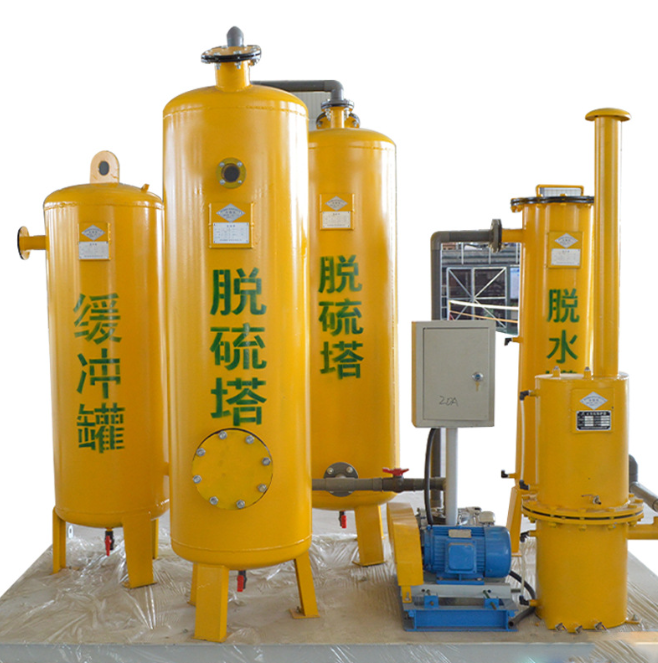
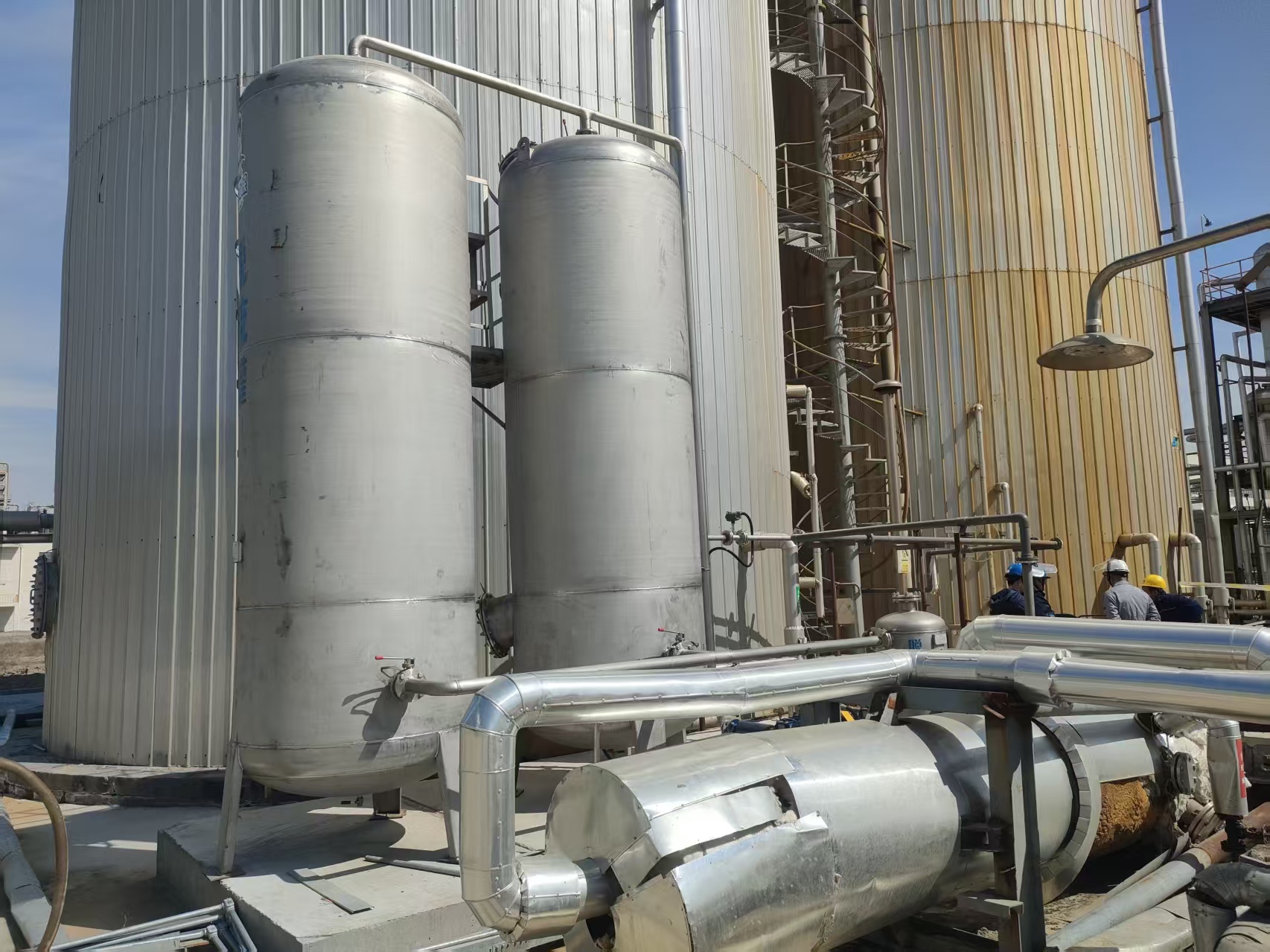
This is why the purification train matters. Dehydration, desulfurization, buffer storage and a water-seal flame arrestor turn raw gas into a stable, engine-safe fuel. At larger plant sizes, dry desulfurization vessels in the 1,000-3,000 mm diameter class loaded with iron-oxide media are a proven route to keeping outlet H2S low, while modular purification packages sized for 100-500 m3 digesters can be shipped complete and commissioned on site.
How OCAT approaches this
As a source manufacturer of biogas storage and purification equipment, OCAT works on the equipment layer of this opportunity: red-mud soft digesters, double-membrane gas holders, dry desulfurization tanks and complete purification systems for projects from household scale up to industrial installations. We do not publish performance guarantees for specific sites - every project is engineered around its measured gas flow and H2S load - but the direction of the IEA's findings matches what we see in enquiries from Asia, Africa and Latin America: demand is shifting from single components towards engineered purification and storage packages.
Source
Originally reported by the International Energy Agency (IEA Commentary, 16 July 2026). This article is an independent editorial summary prepared by OCAT. All figures are attributed to the original source and do not constitute commitments or guarantees by OCAT.
A first-of-a-kind global analysis by the International Energy Agency (IEA) estimates that nearly 900 billion cubic metres of biogas and biomethane could be produced sustainably every year from today's organic waste streams - enough to cover more than 20% of global natural gas demand. The feedstock exists; what is missing is conversion capacity.
Key facts at a glance
- Nearly 900 bcm (billion cubic metres) of biogases could be produced sustainably each year, measured in natural-gas-equivalent terms.
- More than 70% of this sustainable potential lies in emerging and developing economies, led by India and Brazil, as well as China.
- The IEA has launched an interactive online map so decision-makers can explore national and local biogas potential.
- An ambitious yet achievable goal would be to quadruple waste-derived biogas production to nearly 6 EJ by 2035, in line with the COP30 Belem pledge on sustainable fuels.
- Achieving that goal would deliver around 0.5 Gt CO2-equivalent in annual emissions savings.
- In the EU, combined biogas and biomethane production of nearly 20 bcm in 2025 avoided around USD 6 billion of conventional fuel imports.
- Production costs, complex permitting, limited policy support and methane leakage along the value chain remain the main barriers cited by the IEA.
What this means for biogas project developers
The IEA's modelling starts from a simple observation: manure, municipal and industrial waste, and crop residues are already generated in enormous volumes, and most of it is never converted into energy. Redirecting these streams into anaerobic digesters produces biogas that can be upgraded into biomethane - a double dividend, because it prevents methane emissions at source while displacing conventional fuels.
For developers, the practical takeaway is that feedstock availability is rarely the limiting factor. The IEA points instead to production cost, permitting complexity, insufficient policy support and methane leakage along the value chain as the barriers holding projects back. In practice, projects are won or lost on the downstream side: how clean and how stable the gas is when it reaches the engine or the upgrading unit.
Implications for farm-scale and industrial plants
Because more than 70% of the identified potential sits in emerging and developing economies, the growth opportunity is strongest exactly where small and mid-scale digesters are most common. A farm-scale or community plant typically produces raw biogas carrying hydrogen sulfide, moisture and variable pressure - none of which can go straight into a genset, a boiler or an upgrading skid.
This is why the purification train matters. Dehydration, desulfurization, buffer storage and a water-seal flame arrestor turn raw gas into a stable, engine-safe fuel. At larger plant sizes, dry desulfurization vessels in the 1,000-3,000 mm diameter class loaded with iron-oxide media are a proven route to keeping outlet H2S low, while modular purification packages sized for 100-500 m3 digesters can be shipped complete and commissioned on site.
How OCAT approaches this
As a source manufacturer of biogas storage and purification equipment, OCAT works on the equipment layer of this opportunity: red-mud soft digesters, double-membrane gas holders, dry desulfurization tanks and complete purification systems for projects from household scale up to industrial installations. We do not publish performance guarantees for specific sites - every project is engineered around its measured gas flow and H2S load - but the direction of the IEA's findings matches what we see in enquiries from Asia, Africa and Latin America: demand is shifting from single components towards engineered purification and storage packages.
Source
Originally reported by the International Energy Agency (IEA Commentary, 16 July 2026). This article is an independent editorial summary prepared by OCAT. All figures are attributed to the original source and do not constitute commitments or guarantees by OCAT.
- Prev:NO MORE!
- Next:We're Heading to ILDEX Vietnam 2026 — Come Meet Us in Ho Chi Minh City

 Telephone
 E-mail
 Address