KING BOFULEE
 中文简体
中文简体


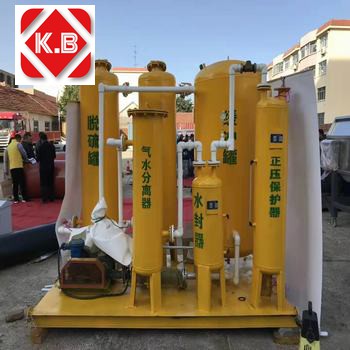
Small Biogas Desulfurization System
Small-scale biogas desulfurization systems are key purification devices for treating hydrogen sulfide (H₂S) in biogas produced from farms, sewage treatment plants, and food waste processing facilities. They aim to improve fuel purity, ensure equipment safety, and meet environmental protection requirements.
This system primarily employs three mature technologies:
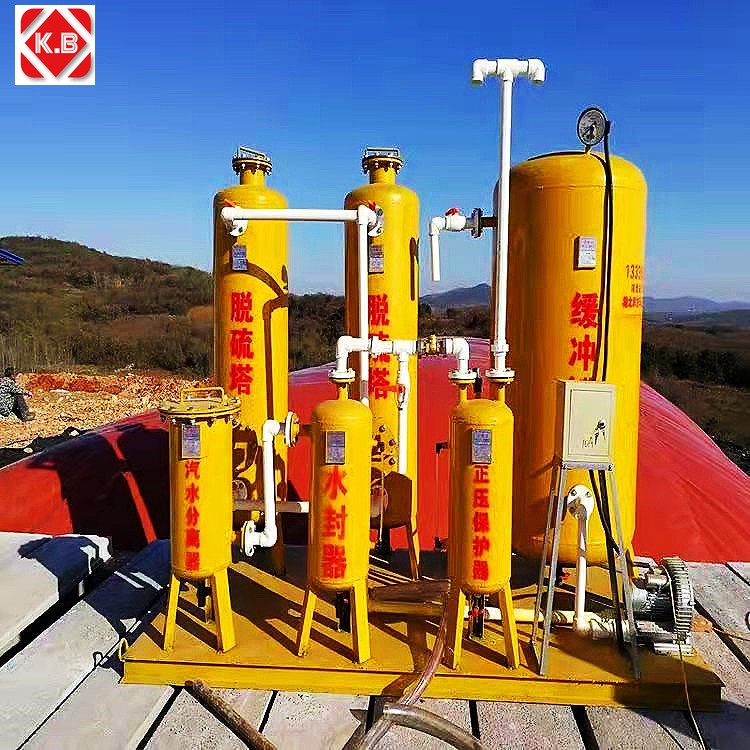
Dry desulfurization: Simple equipment structure, low investment cost, and easy operation; suitable for small or distributed biogas plants with low hydrogen sulfide concentrations.
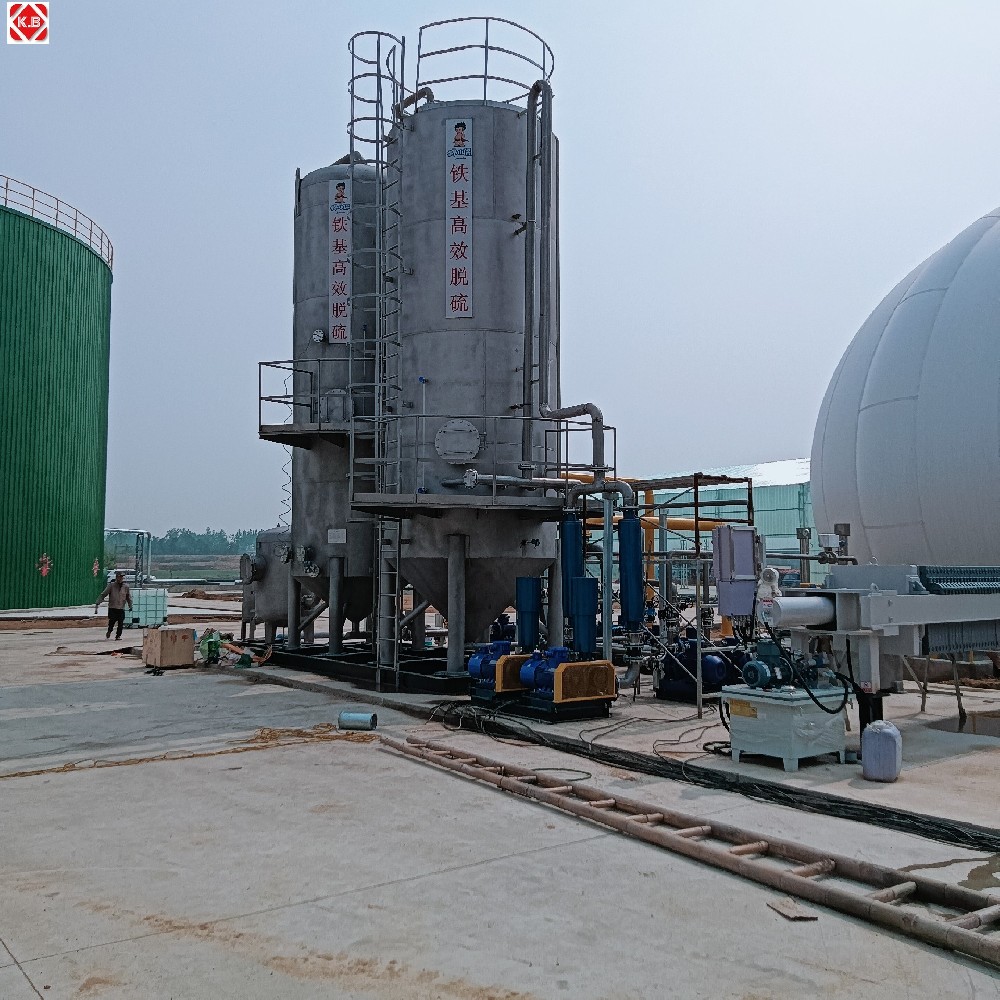
Wet desulfurization (e.g., complexed iron method): Wide processing range, strong adaptability to changes in hydrogen sulfide concentration, high desulfurization efficiency (typically >98.5%), automated operation, and high-purity sulfur as a byproduct.
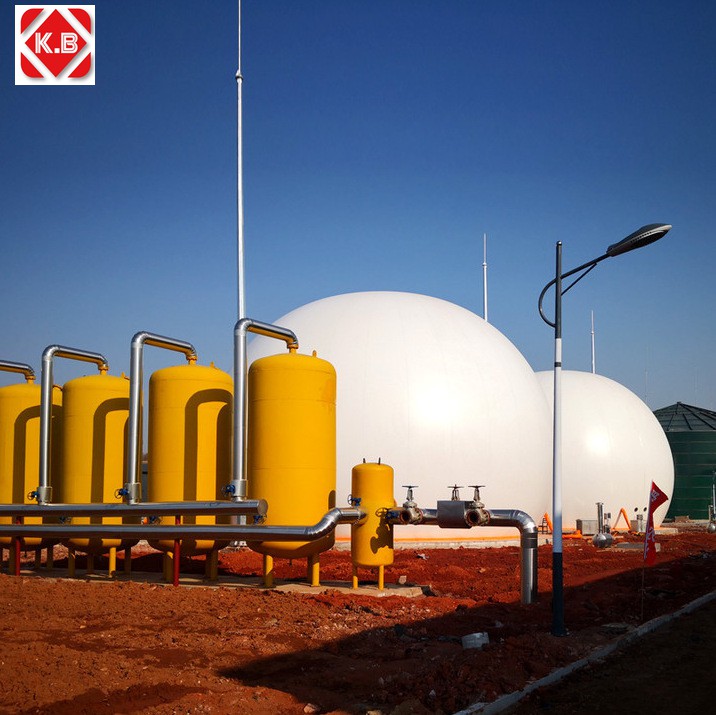
Biological desulfurization: Relies on microbial metabolic decomposition of hydrogen sulfide; low operating cost, environmentally friendly, no secondary pollution; suitable for biogas with medium to low concentrations of hydrogen sulfide, and possesses potential for sulfur resource recovery. Its core advantages include highly efficient hydrogen sulfide removal (removal rate up to 99% or higher), stable and reliable operation, high degree of automation reducing manual intervention, and modular skid-mounted design for easy installation and space saving.
Its application effectively prevents hydrogen sulfide from corroding pipelines, valves, and generator sets, ensuring the safe, efficient, and long-term operation of biogas power generation systems or gas-fired equipment.

 Telephone
 E-mail
 Address