KING BOFULEE
 中文简体



Dry Biogas Desulfurization Tank for H2S Removal in Biogas Plants
The OCAT dry biogas desulfurization tank removes hydrogen sulfide (H2S) from raw biogas before it reaches engines, boilers or upgrading units. Available in carbon steel or SS304, tank diameters run from 400 mm to 2,000 mm, matching biogas flows from a few cubic metres per hour up to full engineering-scale plants.
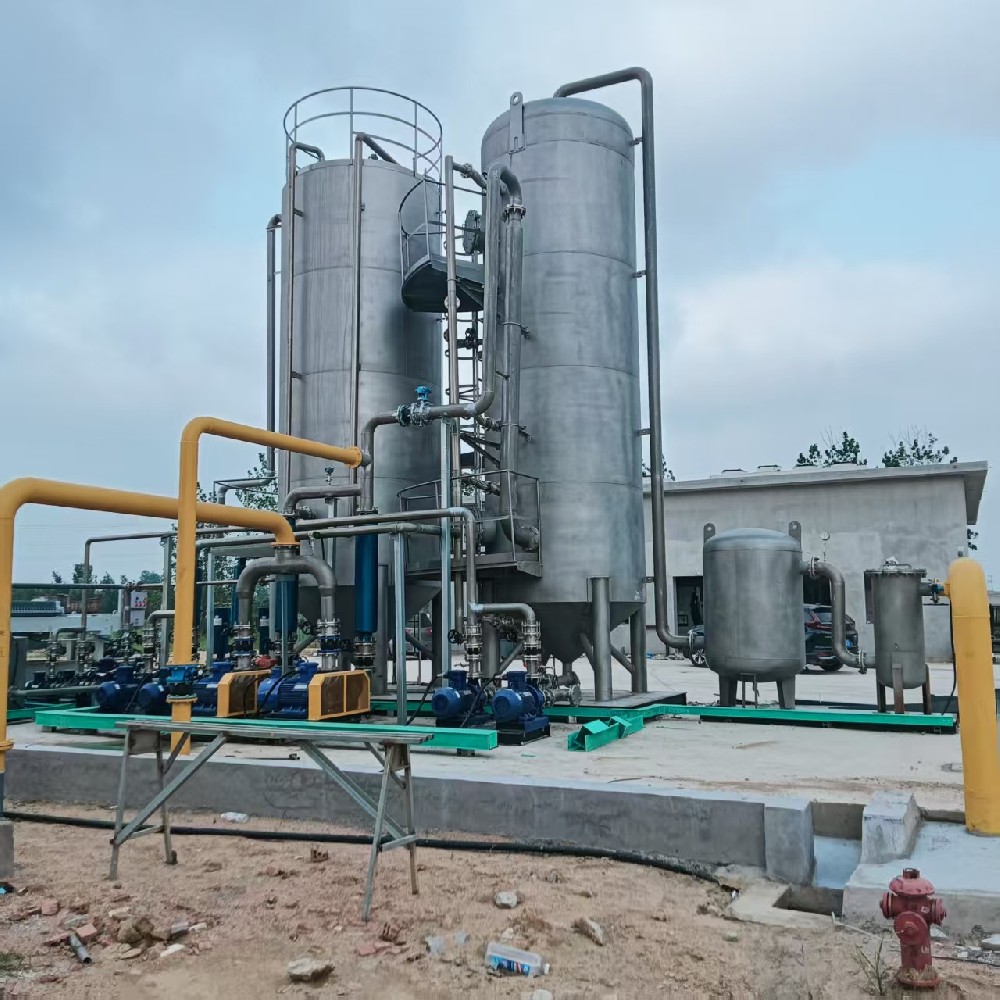
See also: how desulfurization towers are applied in livestock and industrial biogas plants.
Overview
Raw biogas from an anaerobic digester typically carries 1,000-4,000 ppm of H2S depending on feedstock. Left untreated, it corrodes pipelines, gas holders and combined heat and power (CHP) engines, and it forms sulfuric acid during combustion. A dry desulfurization tank passes the gas through a fixed bed of iron-oxide based media, which converts H2S into solid sulfides that stay in the bed until the media is replaced or regenerated.
Dry adsorption is the most widely used H2S removal route for small and mid-scale biogas plants because it has no liquid loop, no chemical dosing station and very low operating attention. For larger plants or very high inlet H2S, it is commonly paired with a biological or wet scrubbing stage upstream - OCAT supplies the dry polishing stage as well as complete purification trains.
Technical specifications
| Parameter | Range |
|---|---|
| Tank diameter x height | 400 x 1500 mm up to 2000 x 6000 mm (typical engineering sizes: 800 x 2300, 800 x 2500, 1000 x 3500) |
| Material | Carbon steel with anti-corrosion coating, or SS304 (optional 316L for corrosive gas) |
| Design flow rate | Approx. 10-500 Nm3/h per vessel depending on diameter; multi-vessel trains for higher flows |
| Desulfurization media | Iron oxide pellets, approx. 15% sulfur capacity (higher-capacity media on request) |
| Expected outlet H2S | Down to less than 5 ppm achievable with adequate contact time and fresh media; final value depends on inlet load and gas condition |
| Configuration | Single vessel, lead-lag (2 x 50%) duplex, or complete skid with dehydration tank, buffer tank, water seal and roots blower |
| Accessories | Ladder and platform for vessels of 2000 mm diameter and above; inlet/outlet flanges; pressure taps; media loading and unloading ports |
Specifications are indicative engineering ranges, not guarantees. Final dimensions are confirmed during project design against the measured gas flow, temperature and H2S load.
Applications
- Farm-scale digesters (100-500 m3) processing manure and crop residues
- Industrial wastewater and food-waste biogas plants feeding CHP units
- Landfill gas and leachate gas pre-treatment before flaring or upgrading
- Biomethane plants as a polishing stage before PSA or membrane upgrading
- Household and community systems with compact 2-2.5 L desulfurizer units
Design and customization options
Every OCAT desulfurization tank is sized around the project's actual gas composition rather than sold as a fixed catalogue item. Options include duplex lead-lag arrangement for continuous operation during media change, integrated dehydration upstream to protect the media from condensate, and complete purification skids that combine dehydration, double desulfurization, buffer storage, a water-seal flame arrestor and roots blower pressurisation in one package. Replacement iron-oxide media is supplied with the tank and can be reordered separately.
Frequently asked questions
How often does the desulfurization media need replacing?
Replacement interval depends on inlet H2S concentration and daily gas volume. With typical agricultural biogas and a correctly sized bed, media lasts several months before the sulfur capacity is consumed; we size the vessel so that changeouts are predictable rather than emergency events.
Should I choose carbon steel or SS304?
Carbon steel with internal anti-corrosion coating is the economical choice for most dry applications. SS304 is recommended where condensate carry-over is expected, where the tank also serves as a dehydration stage, or where site conditions are aggressive.
Can the tank work without an upstream drier?
Warm, humid raw biogas can be treated directly, but persistent condensate shortens media life. For plants with high moisture, we recommend pairing the desulfurization tank with a dehydration tank - a standard configuration in our purification systems.
MOQ: 1 set | Price: Quotation on request | Lead time: 25-45 days after drawing confirmation | Certification: available on request



 Telephone
 E-mail
 Address